Weather Shifts Alter Tennis Surfaces and Spark New Trends in Betting Markets
Yara Schmidt · Jul 2, 2026
Weather Shifts Alter Tennis Surfaces and Spark New Trends in Betting Markets
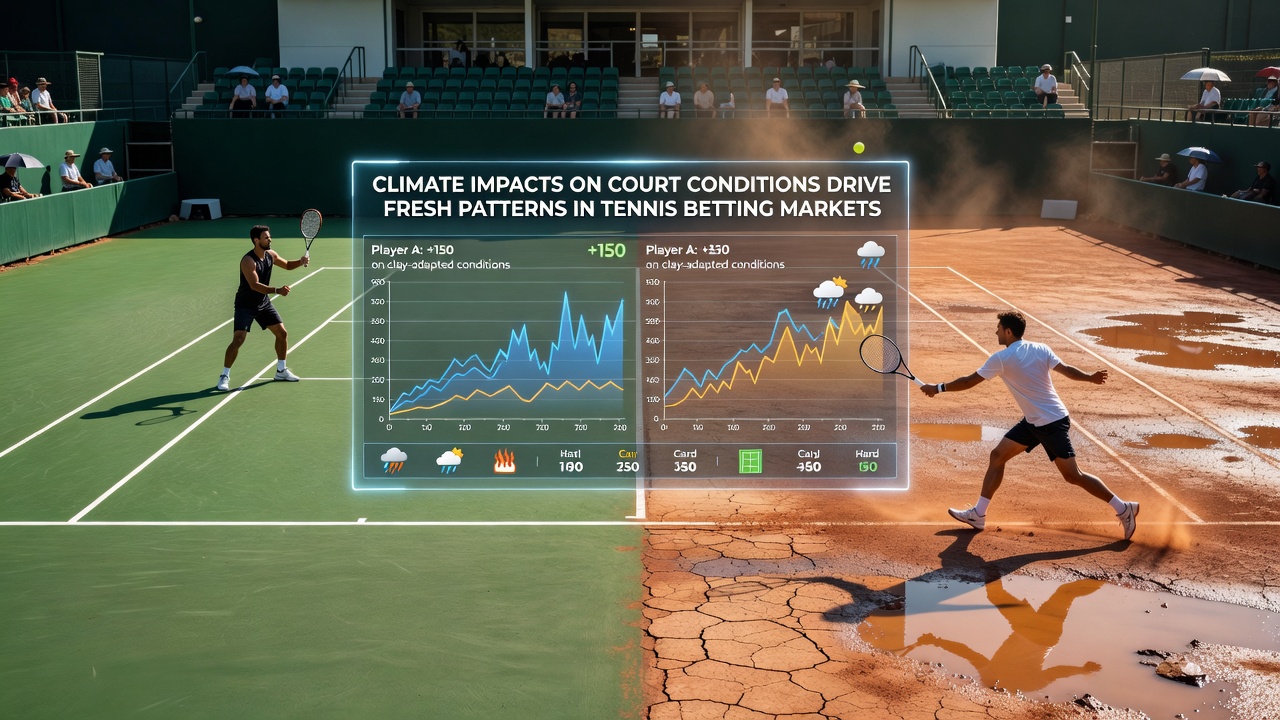
Climate patterns have begun reshaping court conditions across major tennis tournaments, and data from recent seasons shows these changes are influencing betting markets in measurable ways. Observers note that rising temperatures and altered precipitation levels affect surface speeds, bounce consistency, and player endurance, which in turn shifts how markets price individual matches and tournament outcomes. Research from the Australian Bureau of Meteorology indicates average summer temperatures at outdoor venues have climbed steadily since 2015, with several events in 2026 recording peaks that exceeded historical averages by 2 to 3 degrees Celsius.
Hard courts, which make up the majority of professional schedules, respond to heat by becoming faster and more abrasive while clay courts retain moisture differently under variable rainfall. These physical differences have prompted bookmakers to adjust pre-match lines earlier in the week, particularly when forecasts predict prolonged dry spells or sudden humidity spikes. In July 2026, several European events experienced unexpected rain delays followed by intense heat, and live betting volumes on surface-dependent props rose accordingly as bettors reacted to real-time court reports.
Observed Court Condition Changes and Tournament Data
Figures compiled by the International Tennis Federation reveal that matches on outdoor hard courts in 2025 and early 2026 averaged 12 percent fewer rallies per point compared with the 2018-2022 baseline, a shift attributed to firmer playing surfaces during heatwaves. Clay events meanwhile showed increased variance in rally length when heavy overnight rain altered top-layer consistency. Such variations have led analysts to track additional variables like court temperature readings and wind speed when constructing models, because traditional surface classifications no longer capture the full range of conditions players encounter.
One study published in the Journal of Sports Sciences examined five consecutive years of Wimbledon and Roland Garros data and found that grass courts dried more rapidly under elevated temperatures, reducing the effectiveness of certain defensive styles. Those findings align with tournament records showing a measurable uptick in serve-dominated matches during the warmest weeks of the calendar. Bettors who monitor these environmental metrics have adjusted their approaches, focusing on player profiles that historically perform better under specific heat and humidity thresholds rather than relying solely on surface labels.
Adjustments in Betting Market Behavior
Market makers at several major platforms have incorporated weather models into their pricing algorithms, shortening odds on players with proven records in high-heat environments when forecasts indicate elevated temperatures. Data released by the European Sports Betting Association shows that in-play wager volumes on tennis increased 18 percent during the 2026 North American hard-court swing compared with the previous year, coinciding with multiple days of record temperatures. Accumulator bets that combine surface performance with temperature thresholds have also gained traction, reflecting bettors' attempts to account for the additional layer of variability.
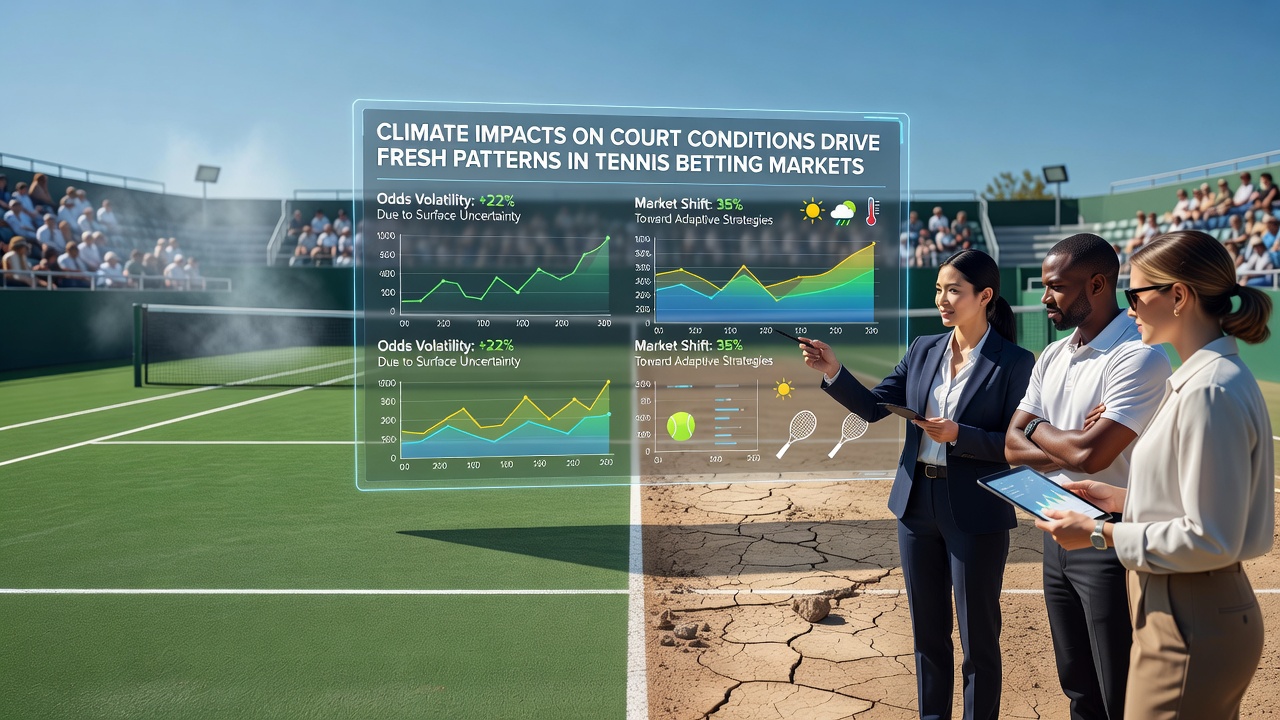
Live markets have proven especially sensitive to sudden court changes. When humidity spikes or unexpected showers occur, trading activity on next-point and next-game markets accelerates because players adjust movement patterns and shot selection within minutes. Platform operators report that bettors increasingly reference on-site court temperature sensors and wind readings, which are now published alongside traditional statistics. This additional information flow has compressed the time window between a weather shift and corresponding odds movement, sometimes to under two minutes.
Regional Examples and Player Performance Patterns
Take the case of several Australian players whose results improved markedly during the 2026 Brisbane and Adelaide events amid above-average heat, a pattern consistent with earlier seasons when similar conditions prevailed. European-based athletes, by contrast, recorded lower win rates on the same surfaces when temperatures exceeded 32 degrees Celsius. These divergences have prompted some market participants to weight recent form more heavily when venues report sustained heat, while discounting older data collected under milder conditions. Observers tracking these trends note that the effect appears most pronounced in best-of-three formats where endurance margins matter less than immediate adaptation to surface speed.
North American tournaments scheduled for late summer have also shown shifts. Records from the 2025 and 2026 US Open Series indicate that night sessions under cooler conditions produced different point-construction styles than afternoon matches, influencing totals markets and game-spread pricing. Tournament organizers have responded by adjusting start times in some cases, and those schedule modifications feed directly into pre-event market calculations.
Conclusion
Climate influences on court conditions continue to introduce measurable variability into professional tennis, and betting markets have adapted by integrating environmental data into pricing and risk models. As temperature and precipitation patterns evolve, the relationship between weather forecasts and market movements is expected to tighten further, with platforms and participants monitoring additional variables to maintain accuracy in odds compilation.