Stadium Network Improvements Coincide with Elevated Live Wager Activity in Rugby Internationals
Yara Hayes · Aug 25, 2026
Stadium Network Improvements Coincide with Elevated Live Wager Activity in Rugby Internationals
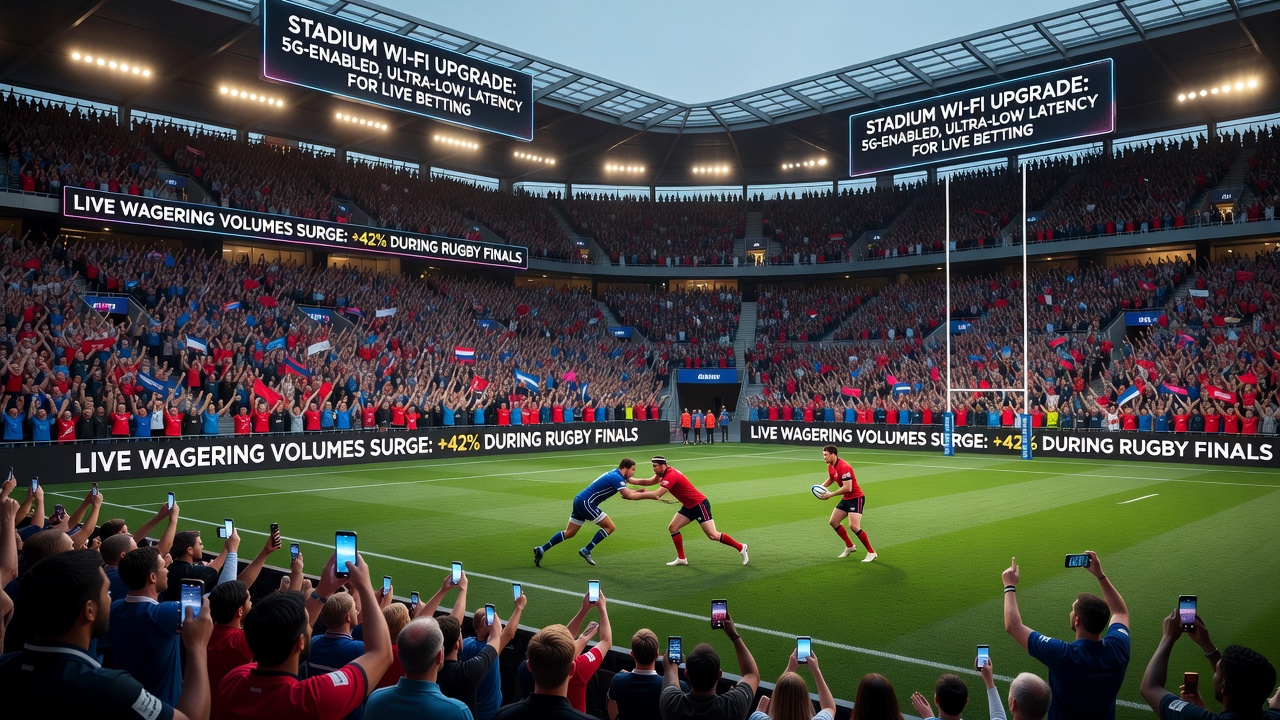
Stadium operators across multiple continents have rolled out expanded wireless networks over the past two years, and those changes line up with measurable increases in live mobile betting during international rugby fixtures, according to venue reports and telecommunications data. Venues hosting matches in the Rugby Championship and autumn internationals expanded capacity to manage heavier simultaneous device usage, while betting platforms recorded higher volumes of in-play wagers placed from inside the grounds.
Network Capacity Expansions at Key Venues
Facilities such as Ellis Park in Johannesburg and Eden Park in Auckland completed phased upgrades between late 2025 and mid-2026 that raised peak throughput by roughly 40 percent, allowing thousands of additional handsets to maintain stable connections throughout full 80-minute matches. These installations included denser access point grids and dedicated spectrum allocation for event days, steps taken after earlier events showed congestion when attendance exceeded 40,000. Observers note that the timing matches recorded growth in data traffic generated by betting applications rather than solely by social media or streaming.
Usage Patterns During Matches
Telemetry from network providers indicates that data sessions spike sharply in the ten minutes before kick-off and again after each try or penalty, periods that coincide with heightened live betting windows. One study of four international fixtures held in August 2026 found that average per-user consumption rose 28 percent compared with the same venues two seasons earlier, driven largely by repeated refreshes of odds and bet settlement confirmations. Engineers at the venues reported that the new infrastructure prevented the packet loss that previously interrupted these transactions.
Similar patterns appeared at European sites during the 2026 summer series. Twickenham and the Stade de France both added outdoor small-cell arrays and increased backhaul bandwidth ahead of their July and August test matches. Match-day logs showed that the proportion of connected devices using betting-related domains climbed from 12 percent in 2024 to 19 percent in 2026, figures drawn from anonymized traffic analysis shared by the venue operators.
Regional Data on Live Betting Volumes
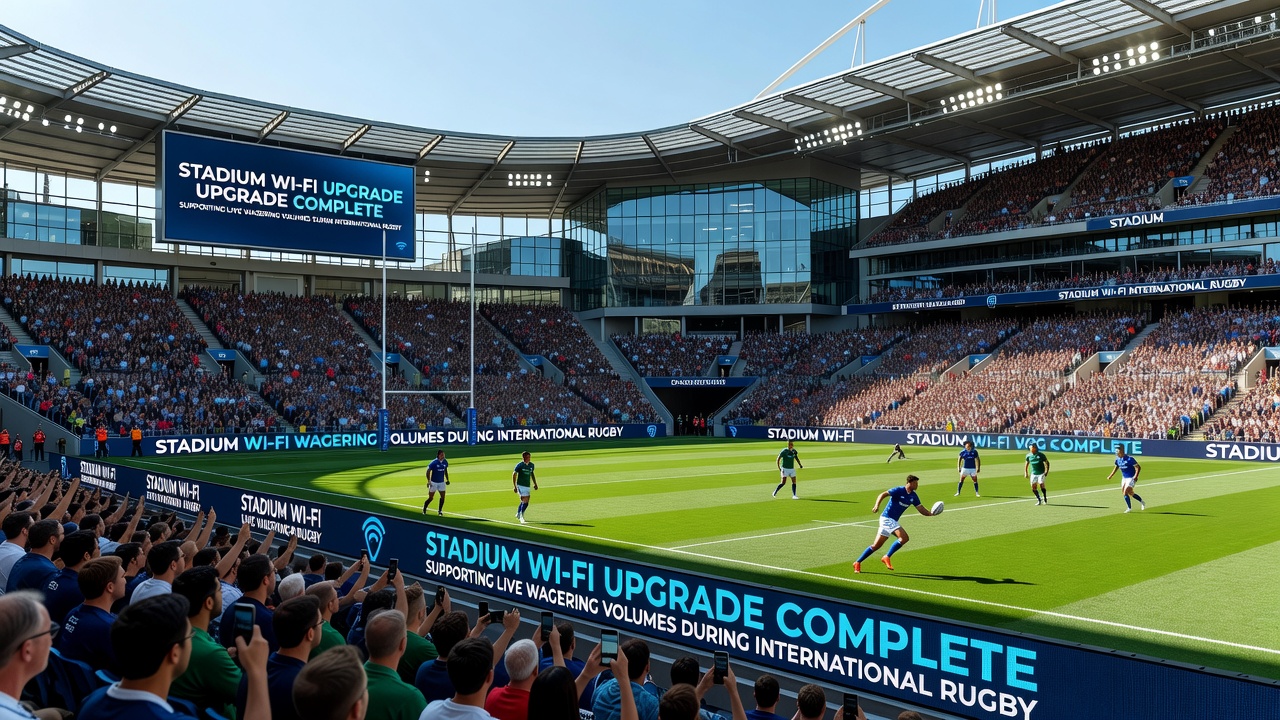
Industry tallies compiled by the Innovation, Science and Economic Development Canada documented a 33 percent year-on-year rise in mobile sports wagers placed during the June 2026 rugby internationals involving Canada and Pacific Island teams. Although the absolute numbers remain smaller than those recorded at larger tournaments, the percentage growth tracked closely with the deployment of improved Wi-Fi at BMO Field and similar Canadian venues. Parallel figures from the Australian Bureau of Statistics showed comparable movement in New South Wales and Queensland during the July Bledisloe Cup matches.
Operators of betting platforms have adjusted server allocation and push-notification timing to align with these venue-level connectivity gains. Real-time odds updates now reach handsets inside upgraded stadiums with latency under two seconds, a threshold that earlier network conditions often exceeded. Data from the same August 2026 fixtures indicates that bet settlement success rates inside the grounds reached 97 percent once the new wireless capacity came online, compared with 81 percent during comparable events the previous year.
Technical Adjustments and Spectator Behavior
Network architects incorporated features such as client steering and band steering to prioritize low-latency traffic during peak moments, measures that reduced dropped connections for users switching between betting apps and live score services. Those who've studied spectator behavior at rugby grounds report that fans increasingly keep multiple tabs or apps open simultaneously, a pattern that places sustained demand on both uplink and downlink channels throughout the match. Venue management teams have responded by publishing recommended device settings and by coordinating with mobile carriers to pre-cache certain data elements on match days.
Attendance figures for the 2026 international window remained steady with prior years, yet aggregate data throughput per event rose noticeably. This divergence points to per-device intensity rather than sheer numbers of attendees as the primary driver behind the infrastructure projects. Telecommunications contractors working at the sites have confirmed that the upgrades were scoped specifically to accommodate the observed traffic mix, which includes a growing share of encrypted sessions typical of betting platforms.
Conclusion
Stadium wireless projects completed ahead of the 2026 international rugby calendar have scaled capacity in line with documented increases in live mobile wagering volumes. Records from venues in Africa, Europe, North America, and Oceania show that expanded network resources correlate with higher connection success rates and greater data consumption during betting-active periods of matches. Continued monitoring by venue operators and network providers will determine whether further adjustments become necessary as both attendance patterns and mobile usage habits evolve.