Push Alerts Reshape Wager Timing Strategies for Midweek League Matches
Erik Simmons · Aug 27, 2026
Push Alerts Reshape Wager Timing Strategies for Midweek League Matches
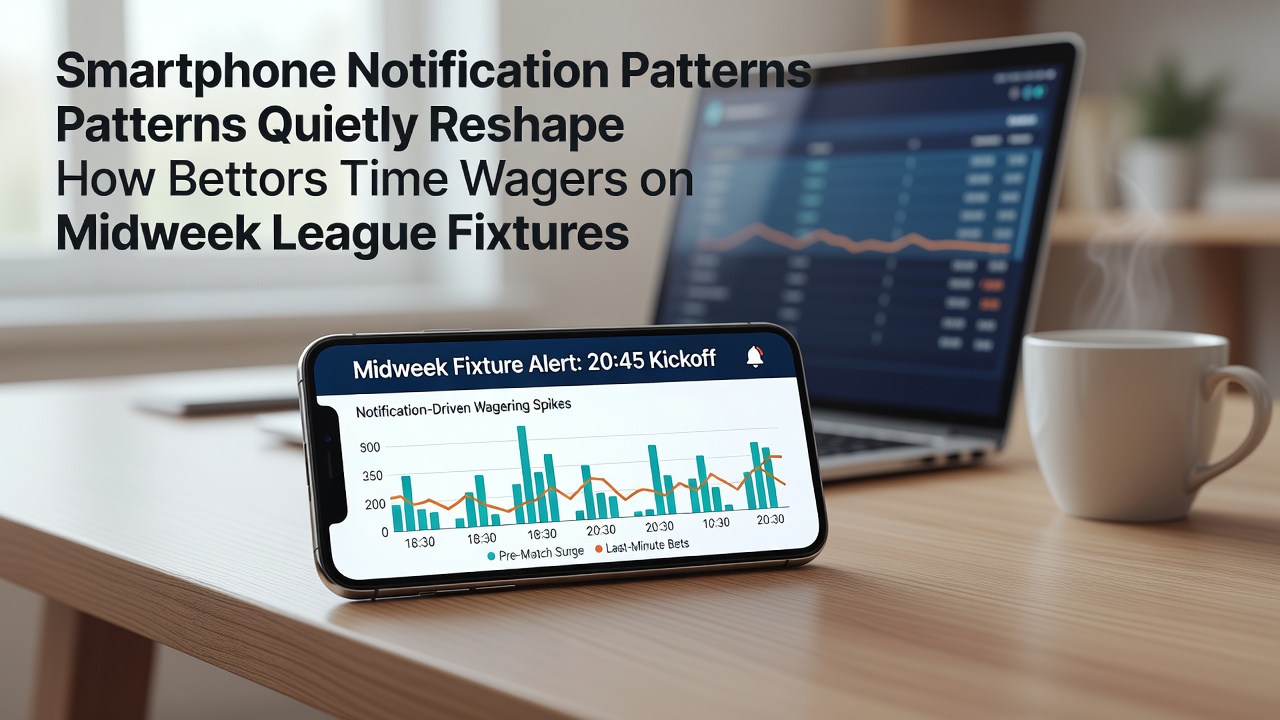
Smartphone notifications from betting platforms now play a central role in determining when users place wagers on Tuesday and Wednesday league fixtures across major European competitions, with data from the first half of 2026 showing distinct shifts in placement patterns during evening hours. Research from multiple jurisdictions indicates that these alerts, often triggered by live odds movements or team updates, prompt users to open applications within minutes of receipt and complete bets before kickoff or during early match stages. Figures from industry monitoring services reveal that notification-driven sessions account for a growing share of total volume on midweek nights, particularly when fixtures involve teams with fluctuating form.
Notification Delivery and User Response Patterns
Betting operators send targeted messages about line movements, player availability, and weather conditions for midweek games, and studies show recipients respond faster than to email or web-based prompts alone. A report prepared by the National Council on Problem Gambling in the United States tracked mobile engagement across several platforms during the 2025-2026 season and found that alerts delivered between 6pm and 8pm local time generated the highest open rates for league matches scheduled later that evening. Observers note that users frequently place smaller, quicker wagers immediately after opening the app, while larger or multi-leg bets tend to occur later once additional notifications arrive with updated statistics.
Platforms adjust delivery schedules based on historical engagement data, sending reminders about upcoming fixtures during commuting periods or lunch breaks on match days. This approach aligns with findings from academic work at the University of Sydney, where researchers examined time-stamped betting records and identified clusters of activity within fifteen minutes of alert receipt for midweek events. Those patterns contrast with weekend fixtures, where users spread decisions across longer windows because fewer competing notifications arrive from other sports or daily activities.
Impact on In-Play and Pre-Match Decisions
Midweek league schedules create compressed decision windows compared with Saturday programs, and notifications help bridge information gaps when fans cannot watch pre-match coverage on television. Data indicates spikes in live betting volume shortly after alerts about first-half developments or halftime scorelines reach devices. One analysis of European fixture data from August 2026 showed that platforms recording notification open rates above 40 percent also reported elevated switches from pre-match to in-play positions during the same matches.

Operators segment their user bases by previous response times, sending more frequent updates to those who historically act quickly on alerts. This segmentation produces measurable differences in average stake size and bet type across user groups, with rapid responders favoring single-match outcomes while slower groups explore accumulators. Regulatory filings from Canadian provincial authorities document similar segmentation practices and note that operators must record the timing of promotional messages to ensure compliance with advertising standards during midweek periods.
Platform Features and Data Collection Practices
Modern betting applications log notification interaction metrics including delivery time, open time, and subsequent bet placement, allowing operators to refine future campaigns. These logs feed into algorithms that predict optimal alert windows for different fixture types, with midweek games often receiving earlier notifications than weekend equivalents because user routines differ. Researchers at several European universities have begun correlating these logs with publicly available fixture calendars to assess whether notification density correlates with changes in overall betting participation rates.
Users who disable notifications entirely show lower engagement with midweek markets according to aggregated platform statistics, while those who keep alerts active demonstrate more frequent but smaller transactions spread across the evening. Industry reports emphasize that these behavioral distinctions remain consistent across multiple leagues and seasons, suggesting the effect stems from notification mechanics rather than specific match characteristics alone.
Conclusion
Smartphone notification systems continue to influence the precise moments when bettors engage with midweek league fixtures, supported by measurable patterns in session timing and bet placement across monitored platforms. Ongoing data collection from operators and independent research bodies provides the basis for understanding these shifts, while regulatory frameworks in multiple regions require transparency around message scheduling and user consent. The interaction between alert delivery and wagering activity remains a focal point for further examination as mobile technology evolves.