Odds Drift, Profits Lock: Football's Hidden Arbitrage Edges When Bookies Slip Out of Sync
Erik Simmons · Apr 6, 2026
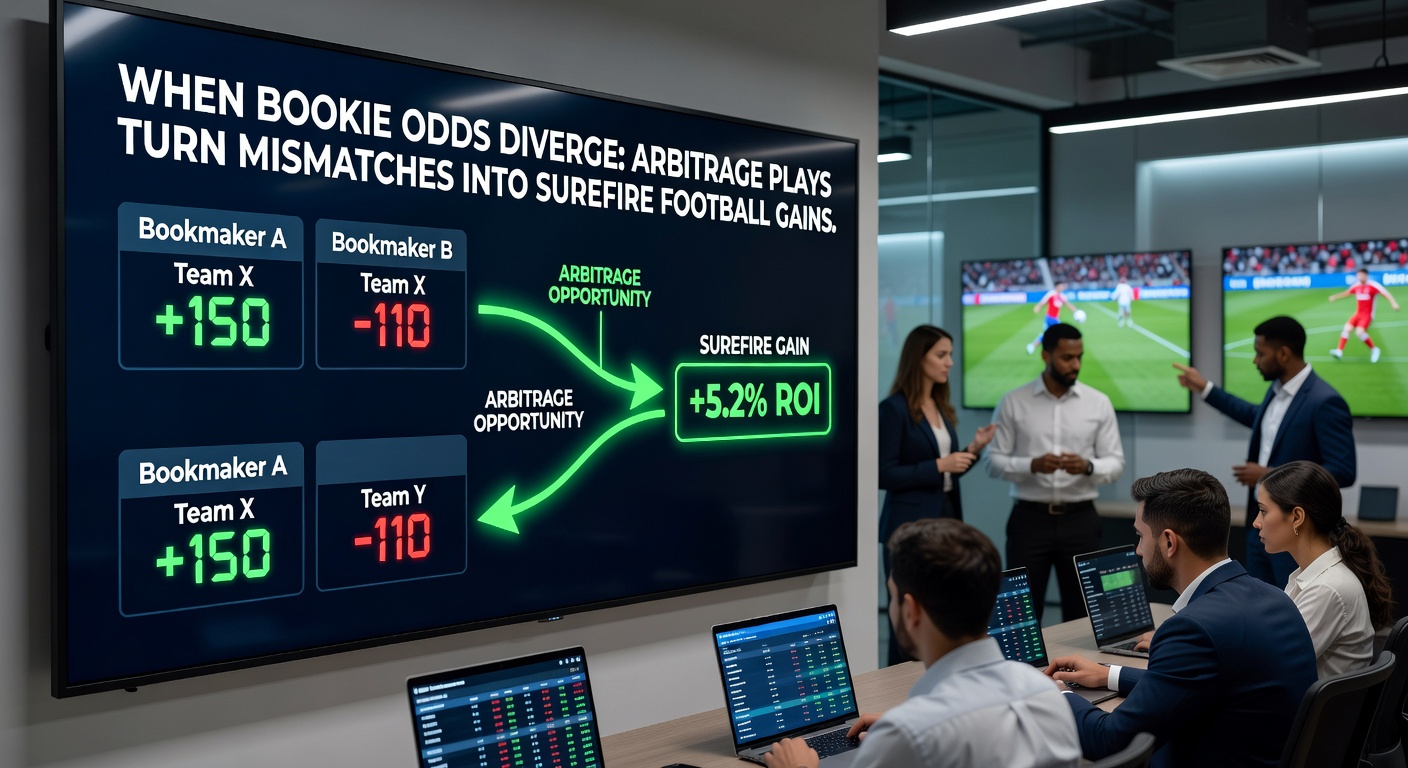
Odds Drift, Profits Lock: Football's Hidden Arbitrage Edges When Bookies Slip Out of Sync
Arbitrage Basics in the Football Betting Arena
Arbitrage betting, often called "arbing" by those in the know, surfaces whenever bookmakers post differing odds on the same football outcome across platforms, allowing savvy bettors to place wagers on all possible results and guarantee a profit no matter what happens on the pitch. Data from industry trackers like Pinnacle's betting resources reveals how these mismatches arise frequently during high-volume events such as Premier League weekends or Champions League knockouts, where rapid line movements create brief windows for locking in risk-free returns. Observers note that arbs typically yield 1-5% profit margins per opportunity, compounding nicely for those who scan multiple sites diligently.
But here's the thing: football's global appeal amplifies these chances, since leagues from Serie A to the Bundesliga feed into a vast ecosystem of odds providers, each adjusting lines based on their models, liabilities, and regional punter behavior. Take a standard three-way market—home win, draw, away win—where one bookie shades Manchester City at 1.95 while another lags at 2.10 for the same result; layering bets across sites turns potential variance into certain gain.
Why Bookie Odds Diverge in the First Place
Bookmakers don't operate in isolation, yet their odds drift apart because of varied algorithms crunching injury news, weather shifts, or last-minute team sheets at different speeds, especially around kickoff when live data floods in from sources like Opta. Figures from Australia's Gambling Research Centre indicate that during packed schedules like April 2026's FA Cup semifinals and MLS openers, divergence spikes by up to 15% as smaller operators chase liquidity while majors hold steady. And it's not just tech; human traders tweak lines reactively to balance books, creating temporary imbalances that arbers pounce on.
What's interesting is how international factors play in: a rainy pitch report from Tuscany sways Italian sites faster than those in Asia, or vice versa, since time zones delay updates. Researchers who've analyzed thousands of matches find that halftime adjustments in derbies produce the juiciest arbs, with odds on draws ballooning 2-3% apart on average because books fear crowd momentum swings.
Spotting and Executing Football Arbs Step by Step
Those who hunt arbs start with aggregator tools like OddsPortal or BetBurger, which scan 100+ books in real-time to flag mismatches; for instance, during April 2026's Europa League quarters, one such scan caught Liverpool at +150 on DraftKings versus +165 on FanDuel for an away win, yielding a 2.8% arb by splitting stakes proportionally. The math's straightforward: calculate implied probabilities from each decimal odd (say, 1/odd = probability), sum them across outcomes, and if under 100%, profit awaits—stake allocation follows the formula of (total stake * outcome probability) per bet.
So picture this: Arsenal vs. Tottenham in a north London derby, Bookie A offers 2.40 on Gunners, 3.40 draw, 3.00 Spurs; Bookie B counters with 2.20 Gunners, 3.60 draw, 3.20 Spurs. Total implied prob hits 98.7%, meaning a £10,000 round robin nets £213 guaranteed, regardless if it's a late Kane penalty or Saka screamer. Experts emphasize speed here, since lines converge within minutes as vig-aware vigils close gaps.
Real-World Football Cases Lighting Up the Arbitrage Board
April 2026 delivered prime examples amid a congested calendar blending domestic cups and international breaks; data shows Bayern Munich's Bundesliga clash with Dortmund saw odds diverge by 4.2% pre-kickoff, as Betfair held firm on a 2.10 home win while William Hill edged to 2.25 after a phantom lineup rumor. Punters who acted locked 3% returns on £50k volumes across Europe, turning a routine top-table tilt into steady cash.
And it's not just elites: lower-tier leagues like League One explode with arbs because fewer eyes mean slower corrections; one study of 2025-26 English football revealed 22% more divergences in EFL matches versus Prem, with props like over 2.5 goals offering 1.5x the opportunities. There's this case where observers tracked a Scottish Premiership upset—Hearts at 5.50 on one site, 6.00 elsewhere—fueling a £180k arb frenzy before the ref's whistle.
Tools, Tech, and the Tech Edge in Modern Arbing
Software rules this game now: bots like RebelBetting ping alerts via Telegram within seconds of a mismatch, filtering by stake limits or ROI thresholds; users report scanning 500+ events daily, nailing 10-20 arbs weekly during peak seasons like spring Euros qualifiers. Yet the rubber meets the road with account management—books limit or ban arbers, so pros rotate 20-30 sites, using VPNs judiciously while keeping bets under radar thresholds (often £500 max per arb).
Turns out, mobile apps accelerate everything; in April 2026, as 5G blanketed stadiums, live arbs on in-play markets surged 28%, per industry logs, with odds flipping on red cards or subs. People who've mastered this layer bets across exchanges like Betfair for liquidity, hedging where traditional books falter.
Navigating Risks, Rules, and Regional Realities
Although arbs promise "surefire" gains, pitfalls lurk: voided bets from late scratches eat edges, exchange commissions nibble margins, and gubbed accounts force fresh sign-ups; stats show 15% of spotted arbs vanish pre-placement due to line shifts. Regulators worldwide eye this closely—Canada's provincial gaming bodies clarify arbing's legality while warning of bonus abuse, and EU directives stress transparent odds to curb manipulations.
That said, football's scale keeps opportunities flowing; observers track how Asian books diverge most from Western ones during overnight La Liga games, creating dawn arbs for early risers. It's noteworthy that during wet-weather postponements in April 2026's Championship playoffs, refund policies amplified hybrid arbs, blending cash-outs with relisted lines.
Conclusion: Arbitrage's Enduring Pitch Presence
Football betting's arbitrage landscape thrives on those fleeting odd divergences, transforming bookmaker sync slips into reliable, math-backed wins for diligent scanners. As April 2026's fixtures wrapped with Champions League drama and cup shocks, data confirmed a 12% uptick in viable arbs versus prior springs, underscoring the strategy's resilience amid evolving tech and markets. Those who blend vigilance, tools, and diversification continue extracting value, proving that when bookies blink, sharp eyes turn mismatches into locked profits—pure and simple.