Mobile Betting Algorithms Drive Personalized Accumulator Offers in Premier League Halftime
Erik Simmons · Jun 30, 2026
Mobile Betting Algorithms Drive Personalized Accumulator Offers in Premier League Halftime
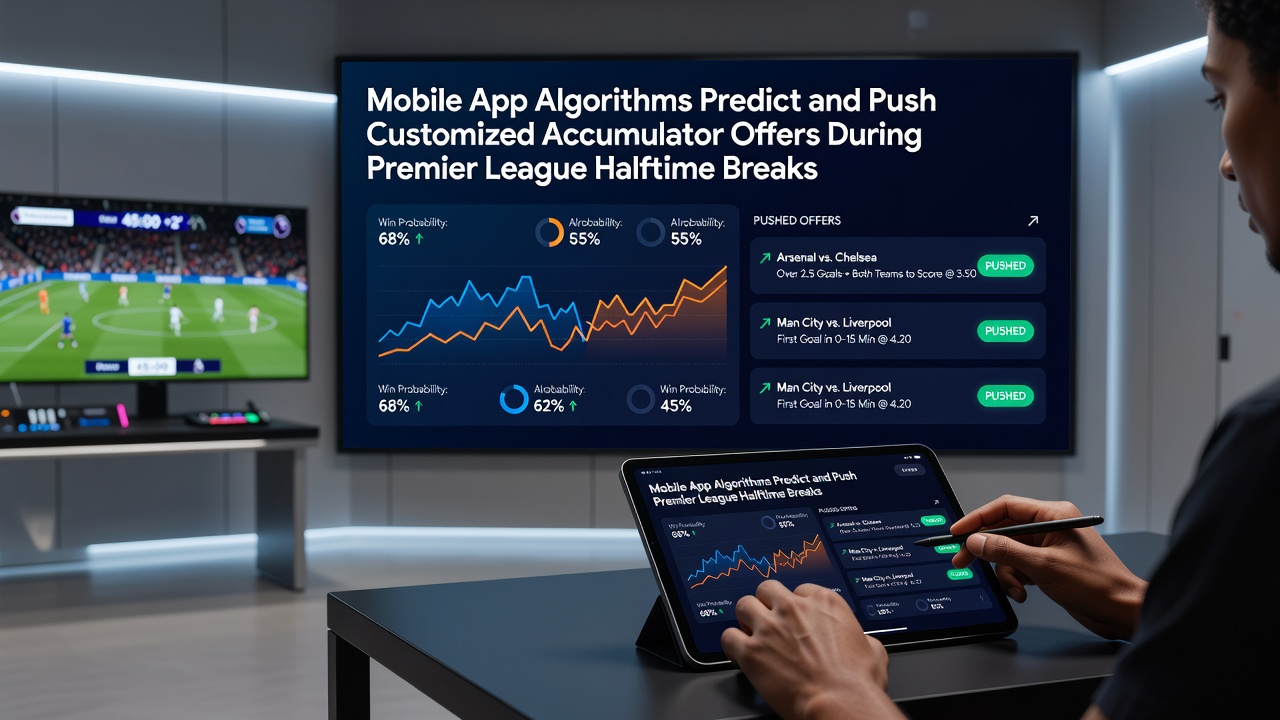
Betting platforms have integrated machine learning systems that analyze user behavior and match statistics to generate tailored accumulator promotions exactly when Premier League games reach halftime, and these tools process vast datasets in real time to adjust offer parameters based on ongoing game developments.
Operators collect information from multiple sources including previous bet patterns, device location signals, and live performance metrics from players involved in the current fixture, then the algorithms cross-reference this data against historical trends from similar scorelines and time remaining to identify combinations with elevated user appeal.
Data Inputs Fueling the Prediction Models
Systems draw on account-level histories that track preferred stake sizes, favored leagues, and typical accumulator lengths, while external feeds supply updated player availability details and weather conditions at stadiums across the country, and the combination allows platforms to refine suggestions such as three-leg or five-leg builders that align with observed preferences rather than generic promotions.
Research from the University of Nevada's International Gaming Institute indicates that halftime windows represent peak engagement periods for mobile users, and algorithms capitalize on this interval by delivering offers within seconds of the whistle, often incorporating live odds adjustments that reflect substitutions or momentum shifts visible on broadcast feeds.
Technical Architecture Behind the Customization
Cloud-based processing clusters handle the heavy lifting, running predictive models trained on millions of past betting sessions to forecast which accumulator structures will resonate with specific demographic segments, and these models update continuously as new match data arrives through official Premier League APIs integrated directly into the app backend.
Push notification services trigger only after the algorithm assigns a confidence score above predefined thresholds, ensuring that delivered offers match user risk tolerance profiles derived from prior activity, and A/B testing conducted by development teams refines the timing and wording of these messages to maximize click-through rates without overwhelming the interface.
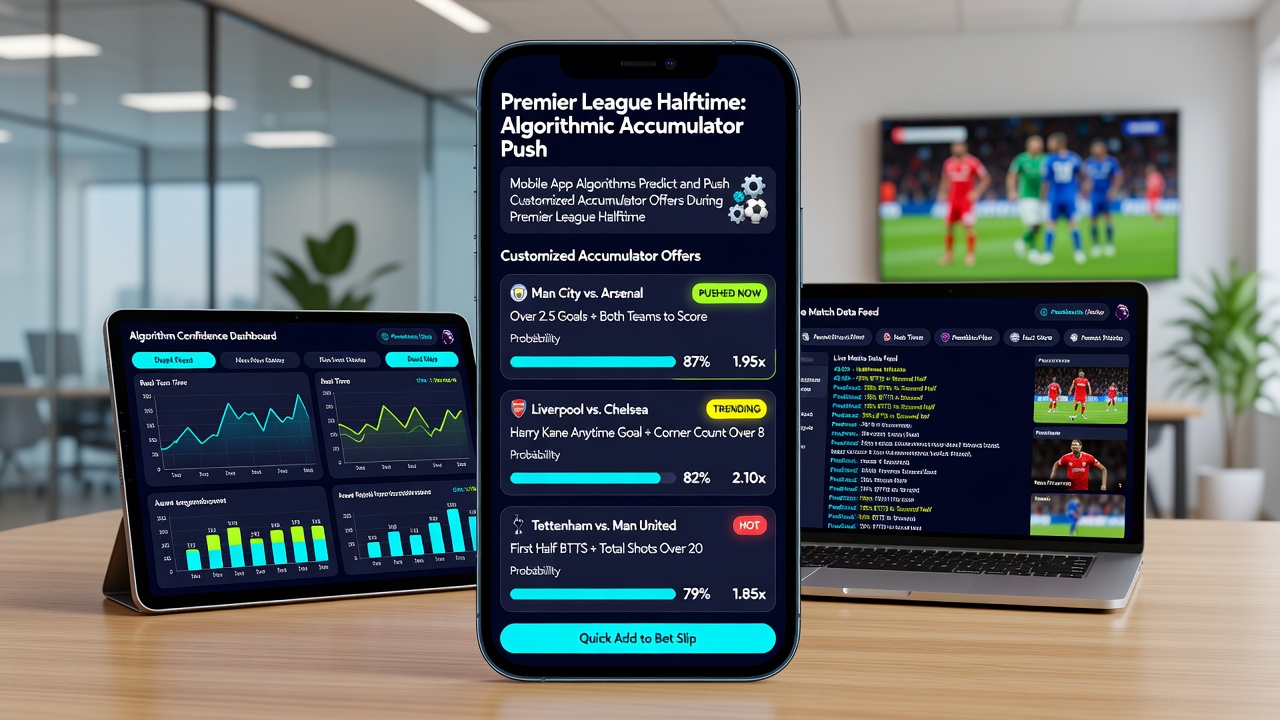
One case documented in industry reports involved a mid-table clash where the system detected heavy prior interest in defensive player goalscorer selections and immediately surfaced a customized four-fold combining clean sheet elements with over-2.5 goals in the second half, and the offer adjusted dynamically when an early goal altered the projected probabilities.
Regulatory Context and Industry Standards
Frameworks established by bodies such as the European Gaming and Betting Association require transparent disclosure of algorithmic decision-making processes, and operators must maintain audit trails showing how user data influences offer generation, while compliance teams review sample outputs quarterly to verify adherence to responsible gambling parameters across all active promotions.
Platforms operating in multiple jurisdictions apply region-specific filters that exclude certain accumulator types based on local rules, and these same systems log interaction metrics that feed back into model retraining cycles scheduled at regular intervals throughout the season.
Observed Patterns in User Interaction
Analytics dashboards maintained by several major operators reveal elevated conversion rates for algorithmically generated halftime accumulators compared with static promotions, and the difference stems from the precise alignment between suggested legs and individual betting histories rather than broad market trends alone.
Take the example of users who consistently favor Premier League fixtures involving teams from northern England, where the model prioritizes player props from those squads during relevant matches, and the resulting offers demonstrate higher completion rates because the selections reflect documented preferences instead of random combinations.
Additional layers incorporate social proof elements such as aggregated popularity indicators from similar user cohorts, yet these features remain secondary to the core personalization engine that prioritizes individual data signals above all else.
Conclusion
The deployment of these specialized algorithms represents a convergence of real-time sports data, behavioral analytics, and mobile delivery infrastructure that has become standard across Premier League betting applications, and continued refinement through seasonal performance reviews ensures the systems adapt to evolving user patterns and regulatory expectations alike.
Observers note that integration with emerging technologies such as enhanced player tracking will likely expand the granularity of future offers, while the foundational approach of halftime timing and customization based on account history remains central to current implementations across the sector.