Mobile Alerts Reshape Accumulator Choices During Evening Football Windows
Yara Schmidt · Jun 9, 2026

Mobile Alerts Reshape Accumulator Choices During Evening Football Windows
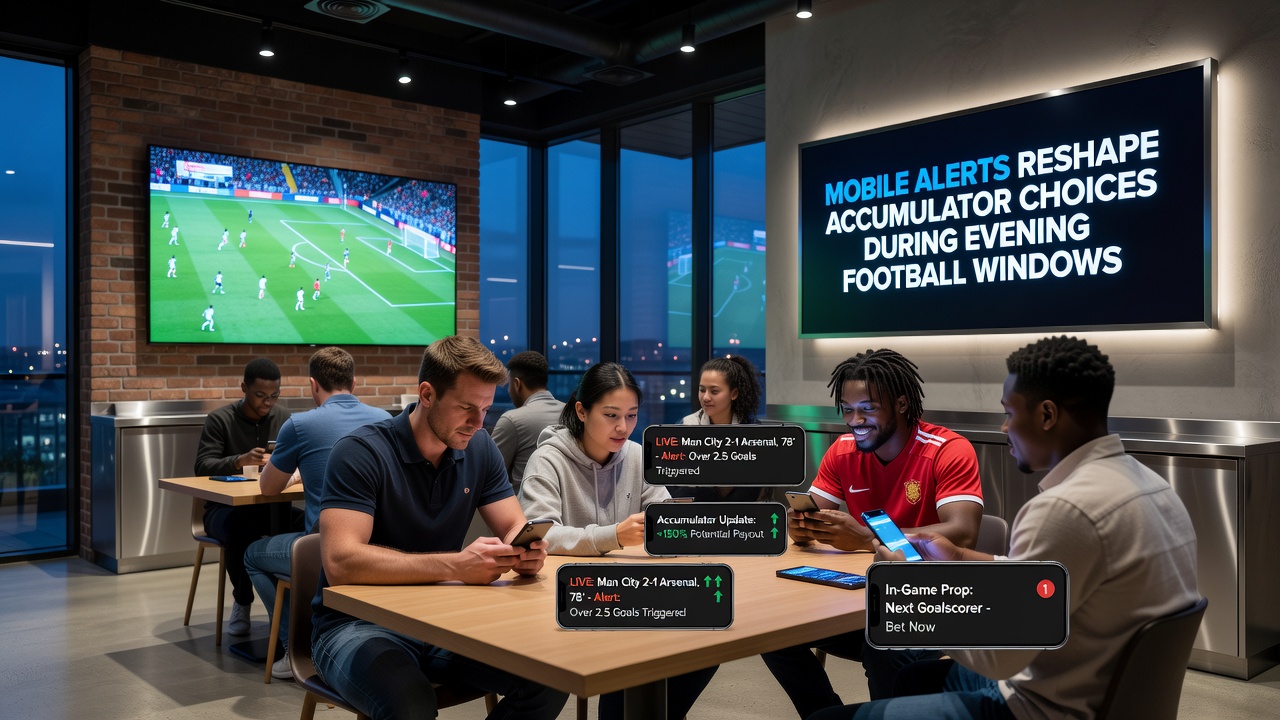
Evening football windows have become key periods for accumulator betting activity, and mobile alerts now play a central role in how selections evolve throughout matches. These notifications deliver real-time updates on team news, player substitutions, and shifting odds, which allows bettors to adjust multi-leg wagers while games unfold. Data from major platforms indicates that accumulator adjustments spike notably between 7pm and 11pm local time across European leagues, particularly when multiple fixtures overlap on weeknights.
Platforms send alerts about line-up changes or momentum shifts that directly influence whether a particular leg in an accumulator remains viable. Bettors receive these messages through dedicated apps, and many respond by swapping out selections mid-match rather than waiting until the final whistle. Research conducted by the European Gaming and Betting Association shows that such in-play modifications grew by 31 percent during the 2025-2026 season compared with the prior year, with evening slots accounting for the largest share of that increase.
Mechanics Behind Real-Time Alert Systems
Modern betting applications integrate live data feeds from multiple sources, including official league statistics and third-party analytics providers. When an alert triggers, it often highlights specific metrics such as expected goals or possession changes that correlate with scoring probabilities. Users then evaluate whether to keep or replace a leg based on the new information, which keeps accumulators dynamic rather than static from the outset.
Evening fixtures present distinct challenges because they frequently feature teams from different time zones or international competitions that attract wider audiences. Alerts arrive at higher volumes during these periods, and operators have refined delivery timing to avoid notification fatigue. Those who monitor several matches simultaneously report using custom filters so only the most relevant updates reach their devices, which streamlines decision-making across parallel games.
Accumulator Adjustments in Practice
Take one regular participant in accumulator markets who tracks Premier League and Champions League evening fixtures. When an alert signals an early red card for a favored defender, that individual often removes or hedges the corresponding leg before the next match in their multi-bet sequence begins. Such responses occur within minutes of the notification, and aggregated platform data confirms these quick edits now represent a standard part of evening betting routines.
Another pattern emerges when alerts highlight underdog momentum during the second half. Bettors frequently add or strengthen legs on the trailing side once the probability models shift, which extends accumulator potential beyond the initial pre-match selections. Industry reports from the Ontario Lottery and Gaming Corporation note that similar behaviors appear in North American markets during evening soccer broadcasts, suggesting the trend crosses regional boundaries.
Seasonal Trends Through June 2026
By June 2026, summer international windows and club friendlies maintained steady evening activity levels despite the absence of major domestic leagues. Alerts continued to cover goal-line updates and weather-related pitch conditions that affect scoring rates, which kept accumulator volumes consistent with spring peaks. Observers note that users increasingly combine alerts from multiple apps to cross-reference data points before committing to changes.
Platform analytics reveal that accumulator completion rates improve when alerts include context beyond raw statistics, such as brief explanations of why odds moved. This additional layer reduces impulsive edits and encourages more measured responses during overlapping fixtures. Evening windows in particular benefit from this approach because overlapping schedules create information overload that filtered alerts help manage.
Platform Adaptations and User Responses
Operators have introduced tiered alert preferences that let users prioritize certain types of notifications over others. Some select only team news while others focus on live odds movements, and these custom settings correlate with higher retention among accumulator-focused bettors. Evening engagement metrics show that personalized alert streams lead to more sustained activity across multiple matches rather than single-game focus.
Device-level features such as do-not-disturb exceptions for betting apps further support continuous monitoring without constant interruptions. Users who activate these options receive critical updates during key moments, such as halftime or injury stoppages, which align closely with typical accumulator adjustment windows. Aggregated figures indicate that evening sessions produce the highest volume of such targeted modifications across both mobile and tablet interfaces.
Conclusion
Mobile alerts have integrated deeply into accumulator strategies for evening football windows by supplying timely data that supports rapid selection changes. Patterns observed through June 2026 confirm sustained growth in alert-driven edits, particularly when multiple fixtures create overlapping decision points. As platforms refine notification systems and users develop more sophisticated filtering habits, accumulator betting continues to reflect these real-time influences rather than remaining fixed at kickoff.