Late Football Surprises Push Bettors to Merge Models and Real-Time Odds
Yara Hayes · Aug 16, 2026

Late Football Surprises Push Bettors to Merge Models and Real-Time Odds
Football matches in the closing stages often produce sudden shifts in scorelines, and these moments have drawn increased attention from bettors who combine statistical models with live odds platforms. Data collected through August 2026 shows that a notable share of in-play wagers now occurs after the 75th minute, when outcomes remain uncertain yet carry heavy implications for accumulators and single bets alike. Observers note that platforms have recorded steady growth in hybrid strategies where pre-match forecasts feed directly into real-time decision tools.
How Late Twists Alter Match Dynamics
Goals scored after the 80th minute continue to reshape final results across major European leagues, and analysts tracking 2025-2026 seasons report that such late strikes appear in roughly one in four fixtures. These developments frequently overturn earlier momentum patterns, leaving bettors who rely solely on static predictions at a disadvantage. Teams that maintain high pressing intensity into the final quarter often generate the opportunities that produce these decisive moments, while defensive lapses become more pronounced under fatigue.
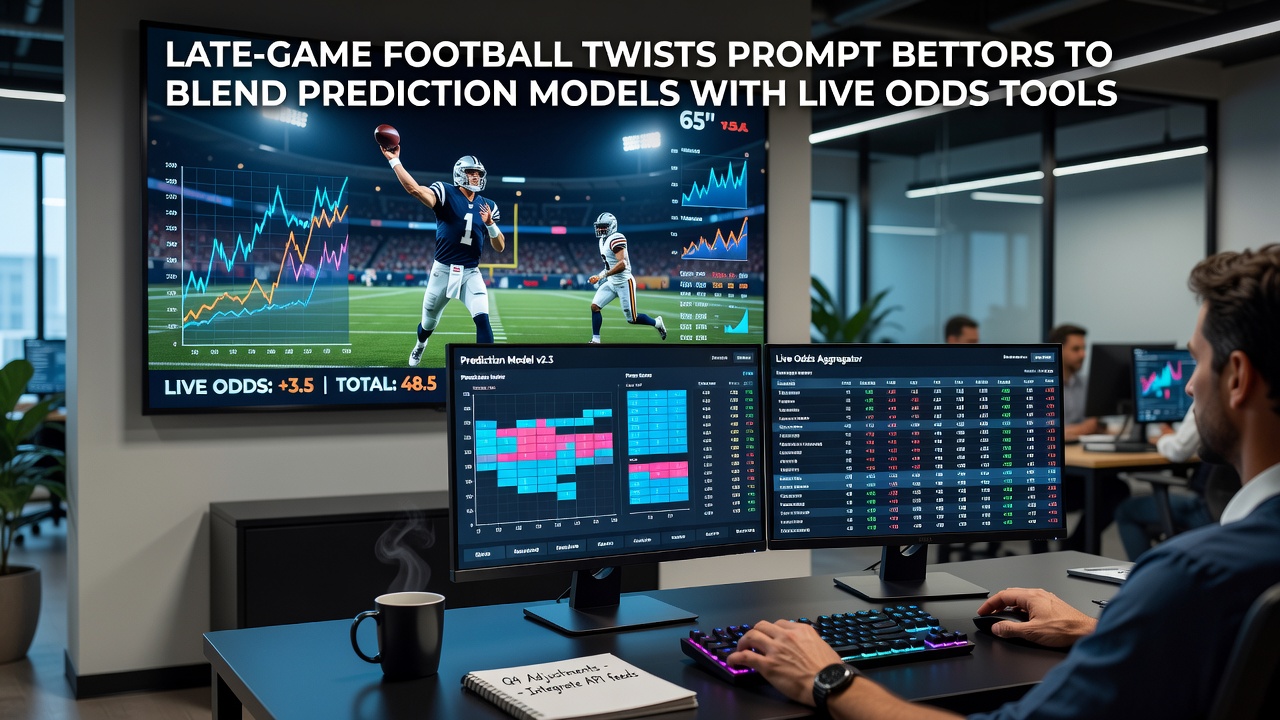
Live tracking systems capture minute-by-minute changes in expected goals, possession value, and player substitution impacts, and these feeds now integrate with betting interfaces at several major operators. Bettors who monitor these metrics alongside model outputs can adjust stakes or exit positions before odds adjust fully to new information.
Prediction Models Enter the Live Environment
Advanced statistical models built on historical match data, player tracking, and situational variables have expanded beyond pre-match use. Developers have adapted these systems to ingest live inputs such as current score, remaining time, and tactical adjustments, allowing outputs to update continuously. Research from the University of Sydney's sports analytics group indicates that models incorporating real-time fatigue estimates improve accuracy in projecting late-game scoring probabilities by measurable margins compared with static versions.
Users access these tools through desktop and mobile applications that connect directly to odds feeds, and the combination allows rapid comparison between model-derived probabilities and market-implied prices. When discrepancies appear, some bettors execute trades or hedge positions while the market recalibrates.
Live Odds Platforms Adapt to Demand
Operators have responded by offering deeper in-play markets and faster price updates, particularly in leagues where late drama occurs regularly. Features such as cash-out options and micro-bets on next event timing now sit alongside traditional win-draw-win selections, and volume in these segments has risen steadily through the first half of 2026. Integration points between model software and bookmaker APIs have become more common, reducing the delay between insight generation and order placement.
Those who study betting patterns observe that participants using combined systems tend to place smaller, more frequent adjustments rather than single large wagers placed before kickoff. This approach aligns with the rapid evolution of match states in the final twenty minutes, where one substitution or set-piece can shift expected outcomes quickly.
Examples From Recent Seasons
Take the August 2026 Champions League qualifier where a side trailing by one goal scored twice in stoppage time, reversing accumulator outcomes for thousands of tickets. Bettors monitoring live expected-goals models alongside shifting odds were able to reduce exposure or switch sides before the final whistle. Similar sequences appeared across domestic cups and international friendlies during the same month, prompting platform reports of elevated activity in the closing stages.
Another instance involved a Premier League match where a red card in the 82nd minute triggered a cascade of model recalibrations and odds movements within seconds. Users who maintained open connections between their analytical tools and the live market executed multiple small hedges, limiting losses that would have occurred under a static strategy.
Regulatory and Industry Context
Authorities in several jurisdictions have examined the growing use of algorithmic assistance in betting, and reports from the Canadian Centre for Gaming Research note increased scrutiny around real-time data access and model transparency. Industry groups such as the European Gaming and Betting Association have published guidelines on responsible integration of third-party analytical tools, emphasizing clear disclosure of automated features to users.
These developments coincide with broader adoption of mobile technology that supports simultaneous operation of multiple data streams, and participation metrics from operators indicate sustained interest in hybrid approaches through the summer of 2026.
Conclusion
Late-game developments in football continue to influence how bettors approach both pre-match preparation and in-play decisions. The combination of established prediction models with live odds tools provides one method for responding to rapid changes in match state, and available data through August 2026 shows measurable activity in this segment. As platforms refine integration options and regulatory frameworks evolve, the patterns observed in recent seasons offer a basis for tracking future developments in this area of sports wagering.