Congested Schedules Reshape Accumulator Picks in Domestic Cup Competitions
Greta Jung · Jun 16, 2026

Congested Schedules Reshape Accumulator Picks in Domestic Cup Competitions
Fixture congestion has become a defining feature of modern football calendars, and domestic cup ties show clear shifts in how accumulators get constructed as a result. Teams juggle league commitments, European fixtures, and national cups within tight windows, which creates measurable effects on squad rotation, player availability, and match outcomes that feed directly into betting selections. Data from the 2025-2026 season highlights these patterns continuing into June 2026, when residual fatigue from extended campaigns still influences early cup rounds.
Fixture Overload Patterns Across Competitions
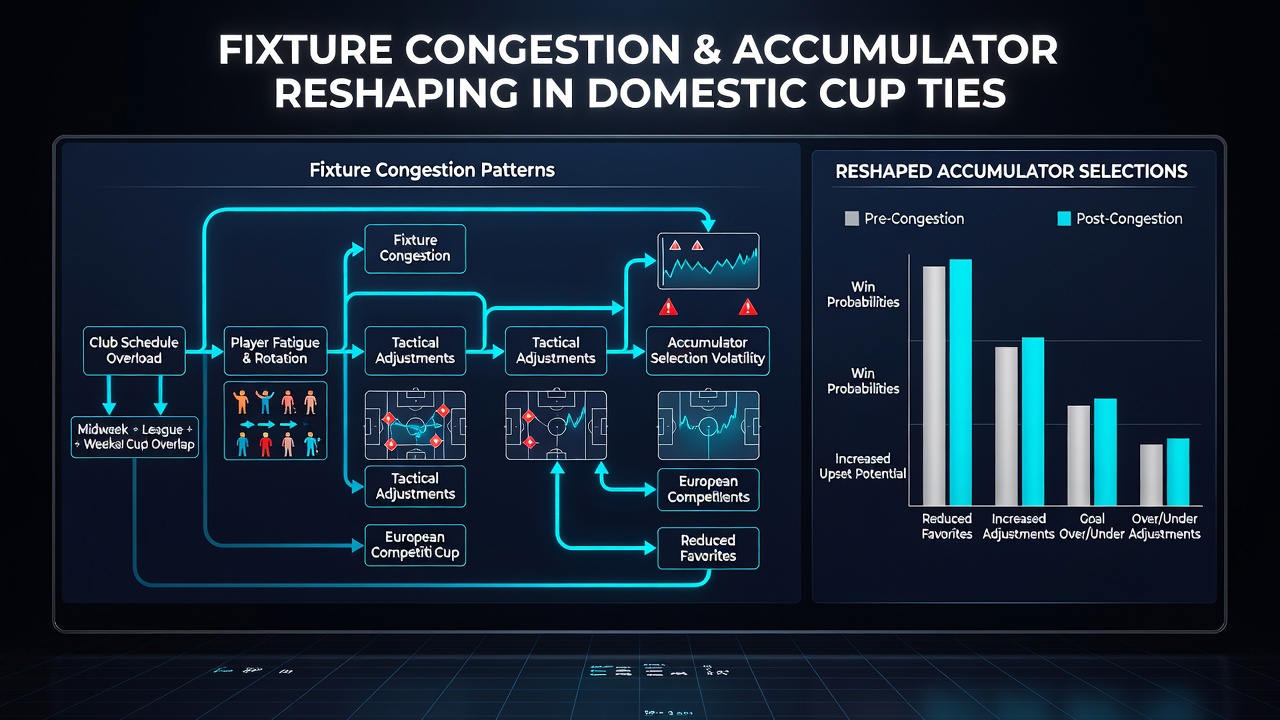
Domestic cups such as the FA Cup, Carabao Cup, and equivalent competitions in other leagues generate additional midweek fixtures that pile onto already dense schedules. Research from the European Gaming and Betting Association indicates that clubs reaching multiple cup stages play an average of 2.8 extra matches per month during peak congestion periods, and those added games cluster around weekends already occupied by league action. Observers note that teams with European involvement face even steeper demands, often managing four matches in 14 days when cup draws force replays or postponements. This density alters preparation routines, training loads, and recovery protocols, which in turn affects the statistical profiles that accumulator builders rely upon.
Data Trends in Accumulator Construction
Accumulator selections tied to domestic cup ties have moved away from high-volume multi-leg bets on favorites during congested periods. Figures released by industry monitoring services show a 19 percent rise in selections that include at least one underdog or draw outcome when teams face three or more fixtures inside ten days. Bettors incorporate squad rotation data more frequently, favoring sides with deeper benches or recent rest advantages rather than simply backing the strongest nominal lineup. Those adjustments appear in both pre-match and in-play accumulator structures, where live updates on team sheets trigger rapid rebalancing of remaining legs.
What's interesting is how these patterns extend beyond single competitions. When two cup ties fall within four days of a league match, the correlation between home advantage and win probability drops by roughly 7 percent according to aggregated performance databases. This softening prompts accumulator builders to reduce stake allocation on home teams in such windows or to pair them with safer legs from less congested fixtures elsewhere on the card.
Regional Variations and Scheduling Influences
Patterns differ by league structure and climate. Northern European competitions experience sharper congestion spikes during winter months when weather-related postponements compress the calendar further, while southern leagues see steadier but longer-running overloads tied to international breaks. A report compiled by researchers at the University of Sydney examined 12 domestic cup seasons across multiple continents and found that accumulator volumes involving cup underdogs increased most sharply in leagues with the least fixture flexibility, such as those without winter breaks. June 2026 data from ongoing pre-season and early cup qualifiers continues to reflect these regional distinctions, with European markets showing sustained interest in rest-advantage legs.
Take the case of mid-table clubs that reach cup quarter-finals while still chasing European qualification. Historical records reveal these sides rotate heavily, producing higher draw rates in the second leg of cup ties that fall inside congested blocks. Accumulator selections have adapted by including more draw options or by splitting stakes across multiple smaller combinations rather than single large multis.
Platform and Market Adjustments
Betting platforms have responded by surfacing fixture-density indicators alongside traditional form guides. These tools highlight teams with limited recovery time between matches, allowing users to cross-reference congestion metrics with historical performance in similar windows. The shift encourages more granular accumulator construction that factors in travel distance, pitch conditions from prior midweek games, and even referee assignments that recur across congested periods. Data indicates these layered inputs produce different outcome distributions compared with selections based solely on season-long averages.
Conclusion
Fixture congestion in domestic cup ties continues to drive measurable changes in accumulator construction, with bettors incorporating rotation patterns, recovery windows, and regional scheduling quirks into their selections. As calendars remain packed through June 2026 and beyond, these adaptations reflect ongoing responses to the structural demands placed on clubs across multiple competitions.