Broadcast Lags Shape Real-Time Football Betting Adjustments
Yara Hayes · Jun 25, 2026
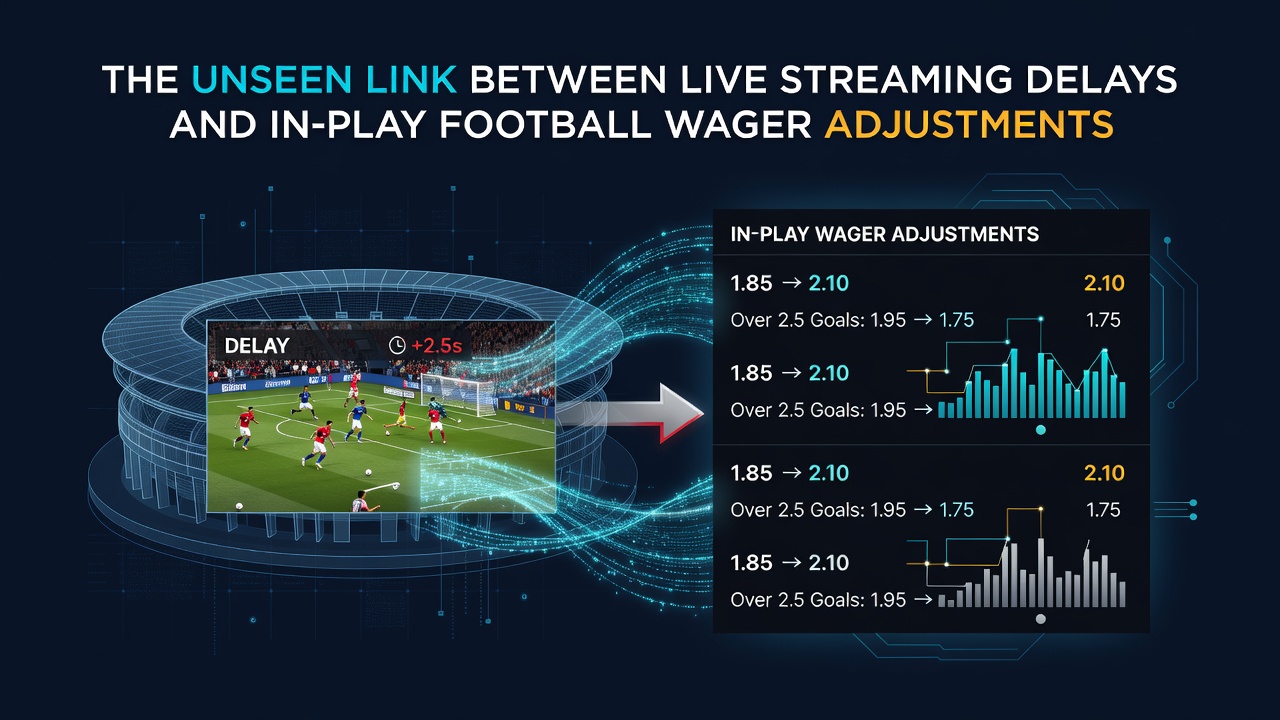
Broadcast Lags Shape Real-Time Football Betting Adjustments
Data from sports media monitoring services shows that live football streams often carry built-in delays ranging from eight to thirty-five seconds, and these lags create measurable effects on in-play wager adjustments as bookmakers receive official match data ahead of viewers. Researchers tracking broadcast infrastructure note that satellite, cable, and over-the-top services introduce processing steps that separate the moment an event occurs on the pitch from the moment it reaches a bettor's screen. In June 2026, during the final weeks of several European domestic seasons, platforms reported sustained patterns where goal and card markets shifted within seconds of official feeds while many users still watched pre-event footage.
Technical Pathways Behind the Timing Gap
Production trucks at stadiums capture multiple camera angles and send compressed signals through fiber links to international distribution hubs, where encoding, ad insertion, and regional blackouts add further milliseconds before content reaches end users. Bookmakers meanwhile subscribe to dedicated data providers that transmit event timestamps directly from pitch-side officials or goal-line technology systems, bypassing consumer broadcast chains entirely. Observers note that this parallel data route allows odds engines to recalculate probabilities the instant a goal registers, whereas stream-dependent bettors encounter the same information only after the broadcast buffer clears. Studies of network latency compiled by European media technology groups indicate that adaptive bitrate streaming and content delivery network routing contribute additional variability, especially during high-traffic matches when viewer numbers spike.
Market Adjustments in Practice
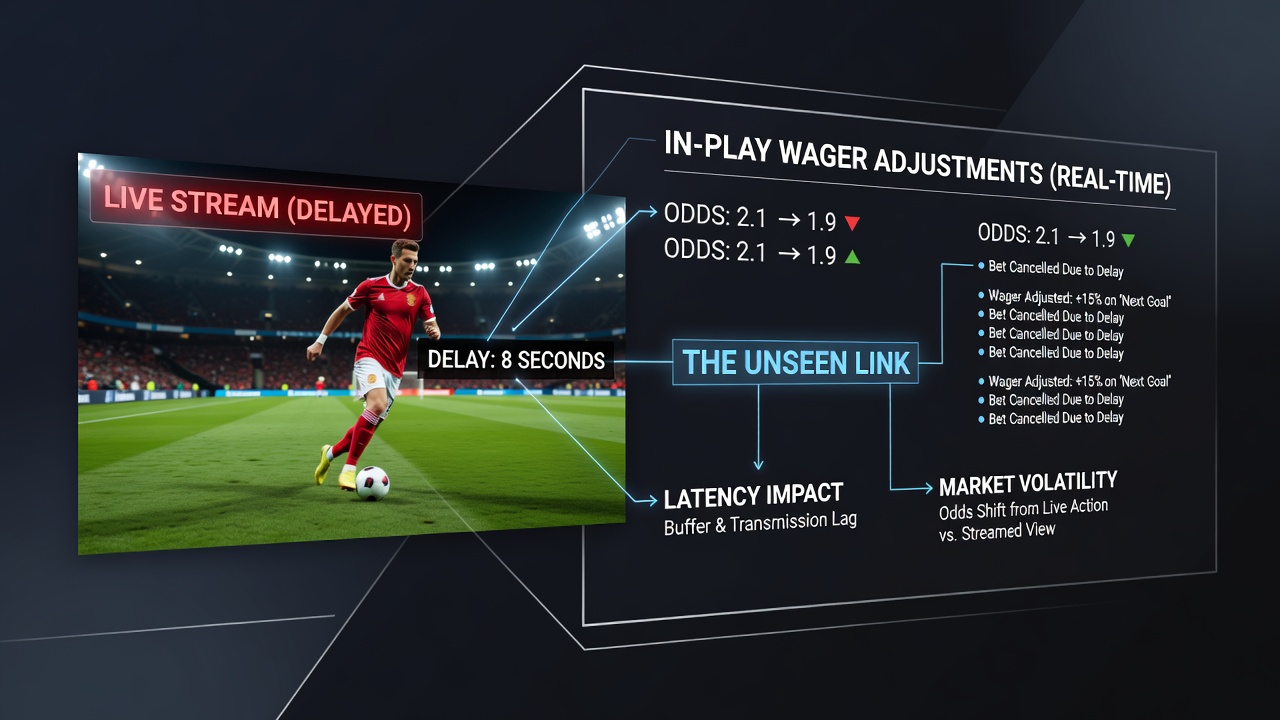
Trading teams at major operators monitor official data streams continuously and trigger automated or manual price changes within one to four seconds of confirmed incidents. When a penalty is awarded, for example, live odds on the next scorer or match outcome move before most viewers have seen the referee's decision on their delayed feed. Those who place bets after the visual confirmation on stream often discover the market has already incorporated the new information, resulting in either missed value or filled bets at revised prices. Figures released by platform analytics firms reveal that in-play football volume during June 2026 fixtures showed elevated cancellation rates on markets that closed immediately after data triggers, underscoring how timing discrepancies affect execution.
Regional Examples from Recent Fixtures
One documented sequence occurred during a mid-June 2026 Champions League qualifier where a red card was issued at the thirty-fourth minute. Official data reached operators at 34:02, prompting an immediate suspension of player prop markets, while several major streaming services delivered the incident to viewers at 34:27. Bettors attempting to react to the visual cue encountered locked selections and adjusted lines on remaining outcomes. Similar timing gaps appeared across multiple Serie A and Bundesliga fixtures that month, where set-piece markets shifted in response to data before the corresponding broadcast frames arrived. Industry reports compiled by international betting technology associations document that such patterns repeat across time zones whenever satellite and terrestrial distribution layers are involved.
Regulatory and Platform Responses
Authorities in several jurisdictions have examined how broadcast timing interacts with fair-play requirements for in-play products. The Australian Communications and Media Authority has published guidance on transparency around data sourcing, encouraging operators to disclose whether wagers are accepted against official feeds or viewer streams. Canadian provincial regulators have likewise requested periodic audits of latency statistics from licensed platforms operating across provincial borders. Meanwhile, technology vendors have introduced low-latency streaming protocols that reduce average delays to under ten seconds for select premium feeds, though adoption remains uneven because rights holders control distribution tiers. Data from university-led media studies indicates these upgraded streams narrow but do not eliminate the gap between official event timestamps and consumer reception.
Implications for Bettor Behavior and Platform Design
Analyses conducted by academic research centers focused on digital gambling show that experienced users increasingly combine multiple information sources, including push notifications from data services, to compensate for stream lag. Newer platform interfaces now display explicit warnings when certain markets approach suspension based on official data triggers, giving users clearer expectations about execution windows. Observers tracking user-session metrics note that sessions involving simultaneous stream viewing and betting activity display higher rates of unfilled orders during periods of rapid scoreline changes. Platform operators continue to refine risk-management algorithms that account for known broadcast latencies when calibrating how quickly lines move after data receipt.
Conclusion
The connection between live streaming delays and in-play football wager adjustments rests on measurable differences in data delivery speed rather than speculation. Official feeds reach operators first, enabling rapid recalibration of markets, while consumer broadcasts follow after encoding and distribution steps. Regulatory bodies outside the United Kingdom continue to monitor these dynamics through latency reporting requirements and technology standards. As streaming infrastructure evolves, the scale of timing discrepancies may shift, yet the underlying separation between pitch events, official data, and viewer screens remains a documented feature of current broadcast and betting systems.